
When the Lagoon Became a Screen: Inside Venice’s Most Emotionally Charged Festival
At the 82nd Venice International Film Festival, cinema did more than premiere. It argued, mourned, seduced and reminded an industry obsessed with the next thing why the big screen still matters.
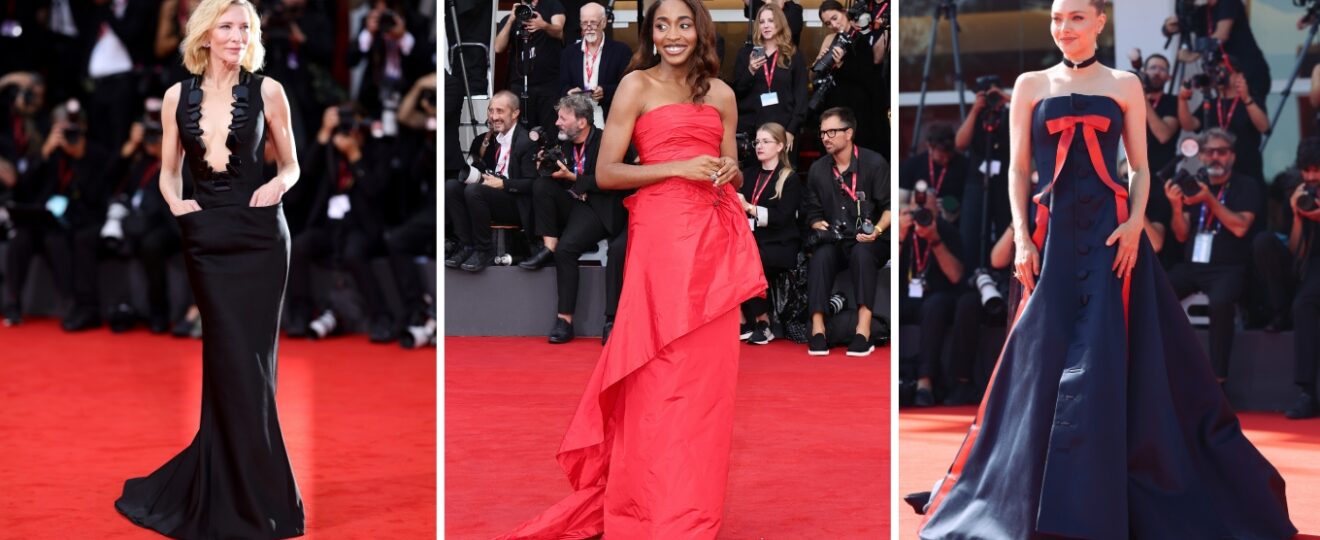
Venice never simply hosts a film festival. It conspires with it. The journey to the Lido begins on water, which means every arrival feels staged before a camera has even appeared: suitcases balanced on jetties, sunglasses catching the lagoon light, publicists checking their phones as speedboats cut white signatures across the blue. By the time the Palazzo del Cinema comes into view, ordinary geography has already been replaced by cinema logic. Everyone is entering a frame.
The 82nd Venice International Film Festival, held from 27 August to 6 September 2025, understood the power of that frame. Directed by Alberto Barbera and opened by Paolo Sorrentino’s La Grazia, it arrived at a moment when the film world seemed to be asking incompatible questions. Could theatrical cinema still command attention? Could glamour coexist with political urgency? Could revered auteurs surprise an audience trained to predict every twist from a trailer? Venice answered in the only convincing way a festival can: not with a slogan, but with eleven days of collisions.
On opening night, old cinema and new anxiety shared the same carpet. Francis Ford Coppola stood alongside Werner Herzog, one titan greeting another while Sorrentino’s film inaugurated the competition. The image might have looked nostalgic, yet the festival around it was anything but settled. The programme moved restlessly between intimate family fractures, state power, ecological dread, spiritual obsession and the violence of the present. Its most memorable films were not united by genre or nationality. They were united by a refusal to make the audience comfortable.
That tension is Venice’s secret advantage. Cannes often feels like the centre of the global film business; Toronto can feel like a vast conversation with the public. Venice is stranger. It is both ceremonial and vulnerable, a palace built beside water, a red carpet only minutes from beaches where festival guests remove their shoes and return to being human. The physical setting makes contradiction seem natural. A devastating morning screening can be followed by an espresso in hard sunlight. A political argument can continue on a vaporetto beside tourists discussing gelato. The festival never lets cinema remain abstract.
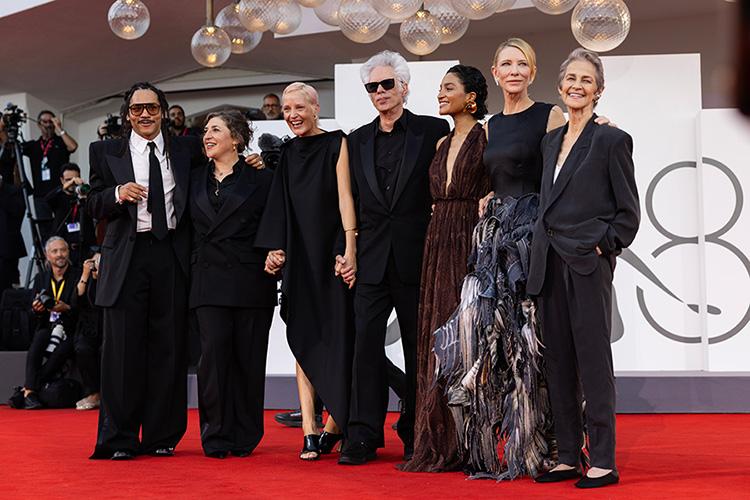
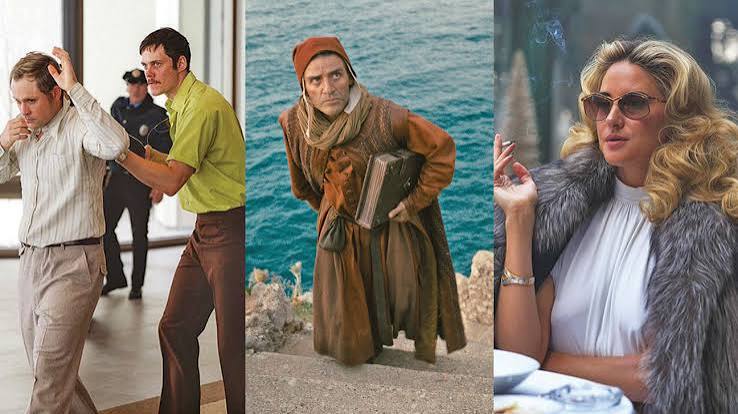
The competition’s 21 films turned that atmosphere into an emotional weather system. Jim Jarmusch brought Father Mother Sister Brother, a triptych about adult children and the distances that grow inside families. Kaouther Ben Hania presented The Voice of Hind Rajab, which placed the unbearable immediacy of a child’s voice at the centre of the festival. Kathryn Bigelow returned with A House of Dynamite, while Guillermo del Toro unveiled Frankenstein, revisiting a foundational myth of creation and abandonment. Yorgos Lanthimos and Emma Stone continued their fearless collaboration with Bugonia. Park Chan-wook arrived with No Other Choice, and Olivier Assayas entered the political hall of mirrors with The Wizard of the Kremlin.
The names promised scale, but Venice 2025 was most compelling when scale became personal. That was true even in films concerned with institutions, nations or catastrophe. Again and again, the programme returned to rooms: a family interior, an office, a control centre, a place where people waited for news. Cinema’s grand subjects were translated into faces listening, withholding, deciding. The result was a festival less interested in spectacle for its own sake than in the moral pressure created by attention.
No film embodied that pressure more fiercely than The Voice of Hind Rajab. Ben Hania’s work received the Silver Lion Grand Jury Prize, but its impact could not be contained by a trophy. It became one of those rare festival moments when the rituals of premieres, applause and awards suddenly seemed inadequate to the reality a film carried into the room. The point was not that art replaced journalism or testimony. It was that cinema created a space in which spectators could no longer treat a human voice as background noise.
The Golden Lion went to Jarmusch’s Father Mother Sister Brother, a choice that initially appeared quieter but revealed the jury’s larger idea of significance. Jarmusch has spent decades finding rhythm in pauses, deadpan exchanges and people who fail to say what matters. His win suggested that cinematic urgency need not always announce itself loudly. A family’s emotional evasions can be as mysterious as any thriller; silence can contain an entire history. At a festival saturated with premieres, Jarmusch’s restraint became radical.
The festival’s architecture amplified that range. The Sala Grande supplied ceremony, but the identity of Venice was dispersed across theatres, press rooms, outdoor conversations and the separate universe of Venice Immersive. A restored classic could sit beside an experiment in extended reality; a debut filmmaker could share the daily conversation with an Oscar winner. This plurality prevented the programme from becoming a single prestige corridor. It suggested that cinema is healthiest when the canon, the marketplace and the laboratory remain in contact.
Venice also honoured craft and performance across a strikingly international field. Benny Safdie won the Silver Lion for directing The Smashing Machine. Xin Zhilei received the Coppa Volpi for Best Actress for The Sun Rises on Us All, while Toni Servillo won Best Actor for La Grazia. Valérie Donzelli and Gilles Marchand took the screenplay prize for At Work; Gianfranco Rosi’s Below the Clouds received the Special Jury Prize; and Luna Wedler was named best young performer for Silent Friend. Together, the awards resisted the idea that the festival had one dominant mood. They created a map of different cinematic intensities.
Beyond competition, Venice made room for memory. Werner Herzog and Kim Novak received Golden Lions for Lifetime Achievement, two honours that described very different forms of screen mythology. Herzog represents cinema as expedition, ordeal and ecstatic inquiry. Novak carries the dream architecture of classical Hollywood, forever associated with the dangerous beauty of Vertigo yet never reducible to a single role. Their presence gave the festival a useful sense of time: new films were not arriving in a vacuum but entering a conversation with images that still haunt us.
That conversation extended into the festival’s masterclasses, where Herzog, Novak, Jia Zhang-ke, Cristian Mungiu and Tsai Ming-liang spoke alongside dialogues involving Sofia Coppola and costume designer Milena Canonero, Alfonso Cuarón and cinematographer Michael Seresin, and Jane Campion with producer Tanya Seghatchian. These encounters mattered because they revealed cinema as a chain of decisions rather than a parade of finished objects. A costume, a lens, a financing plan or a performer’s pause can redirect the meaning of an entire film.
The most useful conversations also dissolved the false division between art and industry. Great films are acts of imagination, but they are also feats of organisation. Someone protects the schedule, finds the money, secures a location, chooses when to compromise and recognises the one element that must never be compromised. On the Lido, where completed works are received as cultural events, the masterclasses restored the messy continuum between an idea and its public life.
For audiences on the Lido, however, the festival remained deliciously physical. It was the sprint between venues, the queue gossip, the sudden storm of flashbulbs, the whispered verdict delivered before the credits had finished. Venice compresses the film world until hierarchy becomes temporarily unstable. A student critic may sit near a studio executive; an unknown director can become the name everyone repeats by dinner. The festival’s glamour attracts attention, but its true electricity comes from this possibility of rapid transformation.
In 2025, that transformation felt especially precious. Streaming has made moving images abundant while attention has become scarce. Venice offered the opposite arrangement: a limited number of seats, a fixed hour, a dark room and the social risk of reacting in public. A premiere audience cannot pause a film to answer a message. It must submit to duration. In that surrender lies the quiet rebellion of the festival experience.
When the final awards were announced on 6 September, Venice had not solved cinema’s economic uncertainty or the world’s political crises. Festivals cannot. What it had done was create a temporary republic of attention, a place where a family comedy, a political testimony, a monster story and an actor’s smallest gesture could become urgent public events. Then the lights came up, the boats left the Lido and the images began their journeys into cinemas and conversations elsewhere.
That may be the real meaning of Venice 2025. The festival was not a verdict on the future of film. It was evidence that cinema still has the power to reorganise a day, disturb a room and turn an island into the emotional centre of the world.
You may also like...
 Cardi B Performing in Nothing But a Bathrobe Is a Big Mood
 Emma Stone Reportedly Welcomed Her First Child with Husband Dave McCary
 The Golden Unicorn Awards 2021: McMafia meets Shakespeare in London
 André Leon Talley, the Legendary Fashion Force, Has Died
 Queen Elizabeth II Has Died at 96 Years Old
 A Fever Dream in the Desert: Ari Aster’s Eddington