

Every Cannes leaves behind a list.
But some years leave behind a mood.
The Cannes Film Festival 2025 will be remembered less for consensus than for friction—a festival where critics didn’t merely agree on what was “good,” but argued, recalibrated, and, at times, surrendered to films that refused to behave.
Across the Croisette, one thing became clear: the most compelling cinema of 2025 was not polished. It was unstable, searching, occasionally abrasive—and impossible to ignore.
Cinema as Disruption, Not Comfort
What defined the strongest films at Cannes this year was not their subject matter, but their attitude toward storytelling.
Take Eddington by Ari Aster—a film that begins in familiar territory and slowly unravels into something far more disquieting. It plays with tone like a destabilising force, refusing to settle into genre.

Or The Phoenician Scheme by Wes Anderson—ostensibly controlled, precise, symmetrical. And yet beneath its architecture lies something looser, more human, almost fragile. The perfection is no longer the point; the cracks are.

Even films like The History of Sound and The Chronology of Water lean away from conventional narrative arcs. They drift, fragment, and reconstruct memory rather than present it cleanly.
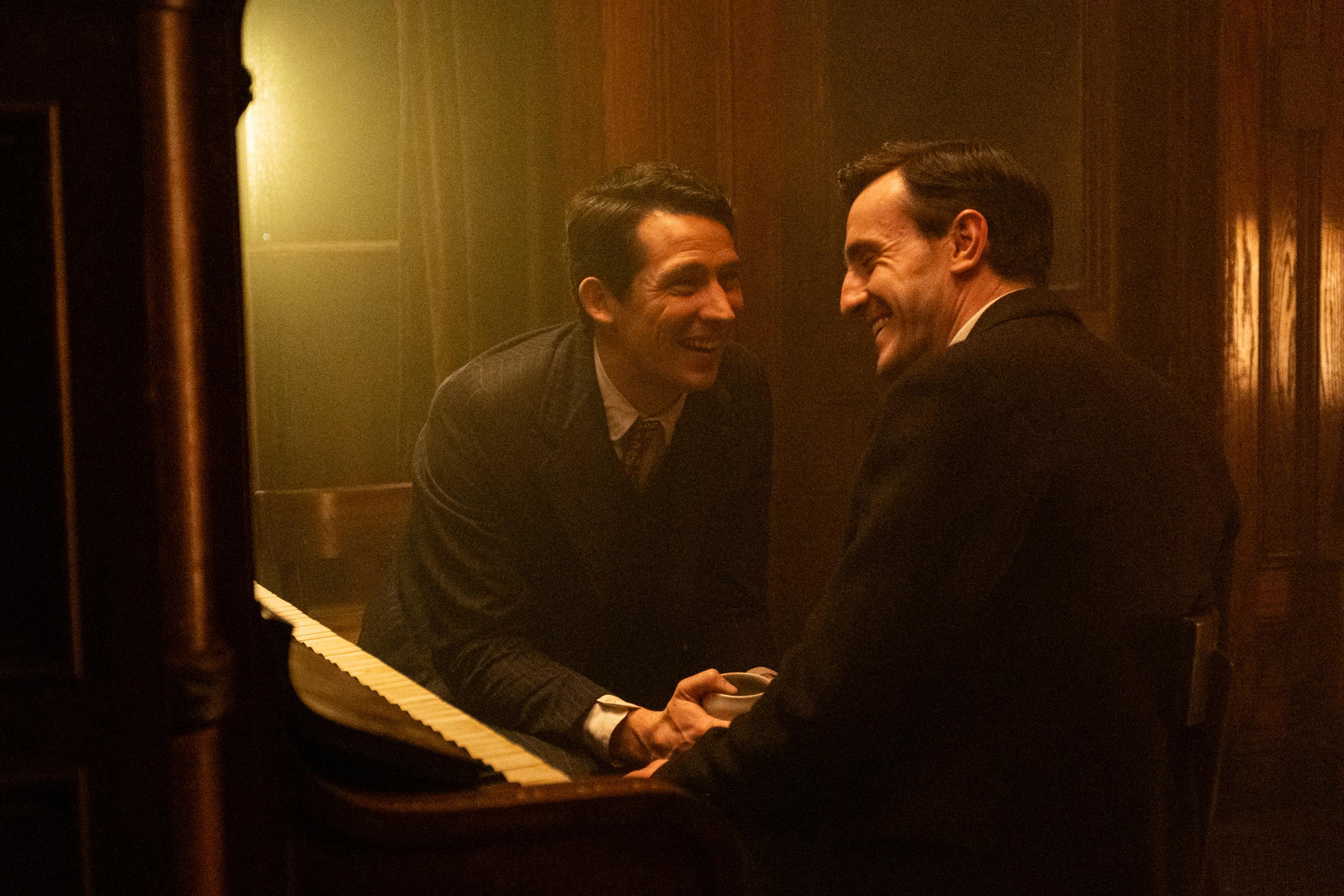
This was a Cannes where storytelling itself felt under interrogation.
The Return of the Personal — But Distorted
If previous years embraced autobiography as confession, Cannes 2025 approached it differently: as construction.
Films like Bono: Stories of Surrender blur the line between performance and self-examination. Identity is staged, reshaped, and performed in real time.
Meanwhile, quieter works—such as Amrum—strip storytelling back to emotional essentials. These films do not announce themselves loudly, but they linger, building resonance through restraint.
Personal cinema in 2025 is no longer about revealing truth. It is about questioning whether truth can ever be fixed at all.
A Festival of Extremes
One of the most striking aspects of Cannes 2025 was its tonal range.
There were films that felt almost aggressively intellectual—demanding patience, interpretation, and distance. And there were others that operated on pure sensation: image, sound, emotion.
Some films invited you in. Others resisted you entirely.
And yet, the festival’s most celebrated titles shared one quality: conviction. Whether minimal or excessive, narrative or abstract, these films were certain of their own language—even when that language was difficult to decode.
The Shape of a New Cinema
Looking across the films that defined Cannes 2025, a pattern begins to emerge.
Not in style. Not in geography. Not even in theme.
But in intention.
These films:
- Resist traditional narrative closure
- Blur the line between reality and performance
- Treat identity as fluid rather than fixed
- Prioritise atmosphere over explanation
They do not aim to comfort the audience. They aim to engage it—sometimes confrontationally.
After Cannes: What Remains
Cannes is always a forecast. A suggestion of what cinema might become in the months—and years—ahead.
If 2025 tells us anything, it is this:
Cinema is moving away from certainty.
It is no longer interested in guiding the viewer gently from beginning to end. Instead, it leaves gaps. It invites interpretation. It accepts ambiguity as part of its structure.
And perhaps that is why these films matter.

Because in a world increasingly defined by noise and immediacy, Cannes 2025 reminded us that cinema still has the power to slow us down—to make us question what we are seeing, and why.
Not everything needs to be resolved.
Some films are meant to stay with you unresolved.
You may also like...
 Cardi B Performing in Nothing But a Bathrobe Is a Big Mood
 Emma Stone Reportedly Welcomed Her First Child with Husband Dave McCary
 The Golden Unicorn Awards 2021: McMafia meets Shakespeare in London
 André Leon Talley, the Legendary Fashion Force, Has Died
 Queen Elizabeth II Has Died at 96 Years Old
 A Fever Dream in the Desert: Ari Aster’s Eddington