

Among the glittering premieres, standing ovations, and bold cinematic breakthroughs at the 77th Cannes Film Festival, one moment stood apart—not just for its grandeur, but for the profound cultural weight it carried. In a deeply moving tribute, the prestigious Honorary Palme d’Or was awarded to George Lucas, the legendary filmmaker whose influence on cinema is nothing short of monumental. This wasn’t just a recognition of a celebrated career—it was a celebration of a visionary whose imagination reshaped the very DNA of modern moviemaking.
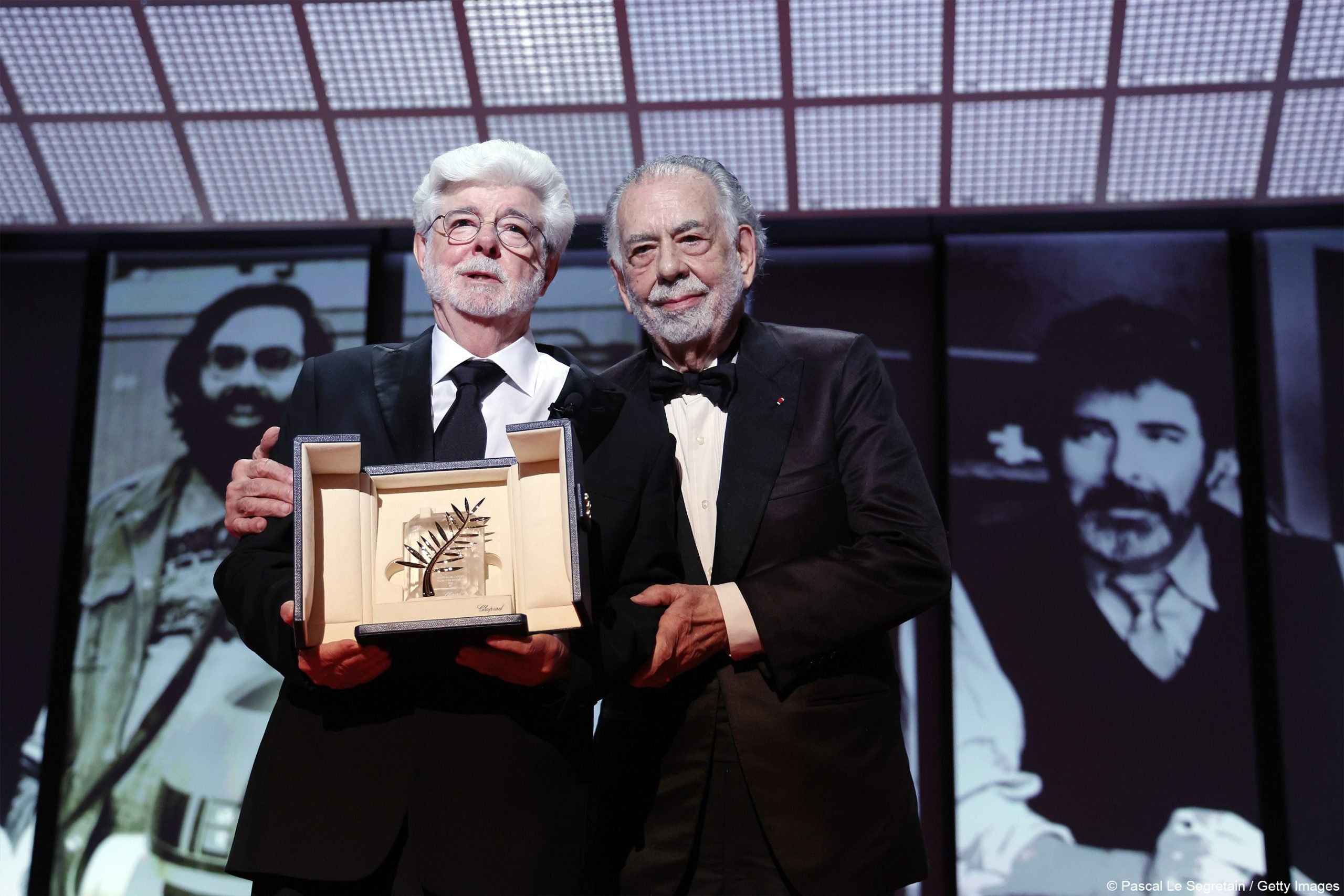
For Cannes, a festival known for honoring auteurs and champions of independent cinema, to place George Lucas at the heart of its celebration is no small gesture. It signals something deeper: a recognition that cinema’s impact lies not only in its artistic ambitions, but in its ability to inspire wonder, shift paradigms, and bring the world together under the flickering light of storytelling. Few have done that as profoundly as George Lucas.
From a Galaxy Far, Far Away to Cannes’ Grand Stage
George Lucas’s cinematic journey is the stuff of legend. When Star Wars: Episode IV – A New Hope hit screens in 1977, it didn’t just launch a space opera—it launched a cultural revolution. Lucas introduced a new cinematic language, a mythology for the modern age, and a level of visual storytelling that had never before been attempted at such scale. Blending classic hero’s journey archetypes with cutting-edge special effects and world-building, Star Wars redefined what movies could be.
But Lucas’s vision was never confined to the stars. With Indiana Jones, co-created with Steven Spielberg, he brought swashbuckling adventure to new heights, giving audiences a modern action hero rooted in nostalgia but bursting with fresh energy. These weren’t just movies—they were events, global touchstones that brought generations into theaters and left permanent imprints on pop culture.
By the time Lucas accepted the Honorary Palme d’Or in Cannes this year, he was not just a director or producer—he was an architect of dreams.
A Technological Trailblazer
As a critic, it’s impossible to discuss Lucas’s legacy without acknowledging his pioneering role in advancing film technology. Through the founding of Industrial Light & Magic (ILM) and Skywalker Sound, Lucas revolutionized the landscape of special effects and sound design. ILM would go on to become the industry standard, pushing the boundaries of what was technically possible, and setting the template for the visual spectacle we now expect from blockbuster cinema.
It’s worth remembering: before Lucas, science fiction had a niche appeal, often relegated to low-budget sets and campy storytelling. After Lucas, it was elevated to the realm of epic drama, emotional storytelling, and technical brilliance. The “blockbuster” era owes much of its success—and survival—to the groundwork Lucas laid. And yet, his influence isn’t limited to the films he made. It’s in the tools he helped develop, the studios he inspired, and the new generation of filmmakers—think J.J. Abrams, Rian Johnson, Patty Jenkins, and even Christopher Nolan—who cite him as a formative influence.
A Mythmaker for the Modern Age
Lucas wasn’t just crafting stories—he was creating modern mythology. Star Wars resonated because it tapped into something timeless: the battle between good and evil, the quest for identity, the longing for something greater than oneself. His stories drew from Joseph Campbell’s monomyth, Eastern philosophy, Westerns, and Akira Kurosawa’s samurai films—remixing global storytelling traditions into a new, uniquely cinematic form.
His characters—Luke Skywalker, Princess Leia, Han Solo, Yoda, Darth Vader—are now as iconic as the legends of old. And his narratives, spanning multiple trilogies and generations, laid the foundation for what we now call the “cinematic universe.” Without Lucas, the Marvel Cinematic Universe might never have existed, nor would the serialized, interconnected storytelling that now defines the biggest films and TV series of our time.
More Than Blockbusters: A Legacy of Independence
While many remember Lucas for his blockbuster success, it’s equally important to recognize his independent spirit. After the success of Star Wars, Lucas made the bold decision to fund and maintain creative control of his own projects, rejecting the traditional studio system. He risked his own fortune to protect his vision—an act of artistic integrity that remains rare, even today.
That independent streak aligns closely with the ethos of the Cannes Film Festival, which has long celebrated bold, uncompromising voices in film. Lucas’s legacy is as much about the freedom to create as it is about the galaxies he imagined.
A Moment That Brought Generations Together
As Lucas took the stage at Cannes to accept his honorary award, the crowd gave a thunderous ovation. Filmmakers, actors, producers, and fans alike were united in their admiration—not just for the movies he made, but for the doors he opened. This was a moment of intergenerational celebration, one that reminded everyone in attendance of the power of film to cross borders, languages, and time.
In his acceptance speech, Lucas spoke with humility about the journey that began as a film student in California and led to a legacy that shaped how the world watches movies. His words were a reminder that vision and courage are at the heart of cinema—that even in an age of streaming and CGI, storytelling still matters most.
Conclusion: A Fitting Tribute for a Cinematic Titan
The honorary Palme d’Or for George Lucas was more than a tribute—it was a coronation. It acknowledged a titan of cinema whose imagination has touched every corner of the globe. From his mythic storytelling and groundbreaking technological advancements to his fiercely independent vision, Lucas embodies everything cinema can be: bold, emotional, immersive, and endlessly inspiring.
In awarding him this honor, Cannes not only recognized a legend—it also reaffirmed the festival’s belief in the transformative power of film. For audiences and creators alike, George Lucas remains proof that a single story—told with heart and vision—can change the world.
And in that galaxy not so far away, the force is still strong.
You may also like...
 Cardi B Performing in Nothing But a Bathrobe Is a Big Mood
 A Midnight Metallic Dress Code Created a Dazzling Scene at The Parrish Museum’s Midsummer Party
 Emma Stone Reportedly Welcomed Her First Child with Husband Dave McCary
 The Golden Unicorn Awards 2021: McMafia meets Shakespeare in London
 André Leon Talley, the Legendary Fashion Force, Has Died
 Queen Elizabeth II Has Died at 96 Years Old